
 0755-23179541
  sales@oyii.net
.png) 8618926041961
8618926041961
1.25Gbps 1550nm 60Km LC DDM
SFP Transceiver
1.25Gbps 1550nm 60Km LC DDM
Product Features
1. SFP package with LC connector.
2. 1550nm DFB laser and PIN photo detector.
3. Up to 60Km transmission on SMF.
4. +3.3V single power supply.
5. LVPECL compatible data input/output interface.
6. Low EMI and excellent ESD protection.
7. laser safety standard IEC-60825 compliant.
8. Compatible with RoHS.
9. Digital Diagnostic SFF-8472 compliant.
10. Signal Ground Isolated to Case.
Application
1. 1.25Gb/s 1000Base-LX Ethernet.
2. Dual Rate 1.06 / 2.125 Gb/s Fiber Channel.
Absolute Maximum Ratings:
|
Parameter |
Symbol |
Minimum |
Maximum |
Units |
|
Storage Temperature |
Tst |
-40 |
+85 |
℃ |
|
Supply Voltage |
Vcc |
0 |
+3.6 |
V |
|
Operating Relative Humidity |
RH |
5 |
95 |
% |
Operation Environment:
|
Parameter |
Symbol |
Min |
Typical |
Max |
Units |
|
Supply Voltage |
Vcc |
3.15 |
3.3 |
3.45 |
V |
|
Operating Case Temperature |
Tc |
0 |
|
+70 |
|
|
Power Dissipation |
|
|
|
1 |
W |
|
Data Rate |
|
|
1.25 |
|
Gbps |
Optical Characteristics
(Ambient Operating Temperature 0℃ to +70℃, Vcc =3.3 V)
|
Parameter |
Symbol |
Min. |
Typ. |
Max. |
Units |
|
Transmitter Section |
|||||
|
Center Wavelength |
λo |
1540 |
1550 |
1560 |
nm |
|
Spectral Width (RMS) |
△λ |
- |
- |
1 |
nm |
|
Average Output Power |
Po |
-5 |
- |
0 |
dBm |
|
Extinction Ratio |
Er |
8 |
- |
|
dB |
|
Rise/Fall Time (20%~80%) |
Tr/Tf |
|
|
180 |
ps |
|
Total jitter |
Tj |
|
|
0.43 |
UI |
|
Optical Eye Diagram |
IEEE 802.3z and ANSI Fiber Channel Compatible |
||||
|
Receiver Section |
|||||
|
Center Wavelength |
λo |
1260 |
|
1620 |
nm |
|
Receiver Sensitivity |
Rsen |
|
|
-24 |
dBm |
|
Receiver Overload |
Rov |
-3 |
|
|
dBm |
|
Return Loss |
|
12 |
|
|
dB |
|
LOS Assert |
LOSA |
-36 |
|
|
dBm |
|
LOS Dessert |
LOSD |
|
|
-25 |
dBm |
|
LOS Hysteresis |
|
0.5 |
|
5 |
|
Electrical Characteristics
(Ambient Operating Temperature 0℃ to +70℃, Vcc =3.3 V)
|
Parameter |
Symbol |
Min. |
Typ. |
Max. |
unit |
|
|
Transmitter Section |
||||||
|
Input Differential Impendence |
Zin |
90 |
100 |
110 |
Ohm |
|
|
Data Input Swing Differential |
Vin |
500 |
|
2400 |
mV |
|
|
TX Disable |
Disable |
|
2.0 |
|
Vcc |
V |
|
Enable |
|
0 |
|
0.8 |
V |
|
|
TX Fault |
Assert |
|
2.0 |
|
Vcc |
V |
|
Deassert |
|
0 |
|
0.8 |
V |
|
|
Receiver Section |
||||||
|
Output differential impendence |
Zout |
|
100 |
|
Ohm |
|
|
Data Input Swing Differential |
Vout |
370 |
|
2000 |
mV |
|
|
Rx_LOS |
Assert |
|
2.0 |
|
Vcc |
V |
|
Deassert |
|
0 |
|
0.8 |
V |
|
EEPROM INFORMATION(A0)
|
Addr |
Field Size (Bytes) |
Name of Field |
HEX |
Description |
|
0 |
1 |
Identifier |
03 |
SFP |
|
1 |
1 |
Ext. Identifier |
04 |
MOD4 |
|
2 |
1 |
Connector |
07 |
LC |
|
3-10 |
8 |
Transceiver |
00 00 00 02 12 00 0D 01 |
Transmitter Code |
|
11 |
1 |
Encoding |
01 |
8B10B |
|
12 |
1 |
BR, nominal |
0D |
1250M bps |
|
13 |
1 |
Reserved |
00 |
|
|
14 |
1 |
Length (9um)-km |
3C |
60km |
|
15 |
1 |
Length (9um) |
64/C8/FF |
|
|
16 |
1 |
Length (50um) |
00 |
|
|
17 |
1 |
Length (62.5um) |
00 |
|
|
18 |
1 |
Length (copper) |
00 |
|
|
19 |
1 |
Reserved |
00 |
|
|
20-35 |
16 |
Vendor name |
57 49 4E 54 4F 50 20 20 20 20 20 20 20 20 20 20 |
WINTOP |
|
36 |
1 |
Reserved |
00 |
|
|
37-39 |
3 |
Vendor OUI |
00 00 00 |
|
|
40-55 |
16 |
Vendor PN |
xx xx xx xx xx xx xx xx xx xx xx xx xx xx xx xx |
ASC II |
|
56-59 |
4 |
Vendor rev |
31 2E 30 20 |
V1.0 |
|
60-61 |
2 |
Wavelength |
06 0E |
1550nm |
|
62 |
1 |
Reserved |
00 |
|
|
63 |
1 |
CC BASE |
XX |
Check sum of byte 0~62 |
|
64-65 |
2 |
Options |
00 1A |
LOS, TX_DISABLE, TX_FAULT |
|
66 |
1 |
BR, max |
32 |
50% |
|
67 |
1 |
BR, min |
32 |
50% |
|
68-83 |
16 |
Vendor SN |
00 00 00 00 00 00 00 00 00 00 00 00 00 00 00 00 |
Unspecified |
|
84-91 |
8 |
Vendor date code |
XX XX XX 20 |
Year, Month, Day |
|
92-94 |
3 |
Reserved |
00 |
|
|
95 |
1 |
CC_EXT |
XX |
Check sum of byte 64~94 |
|
96-255 |
160 |
Vendor specific |
|
Diagnostics
|
Parameter |
Range |
Accuracy |
Unit |
Calibration |
|
Temperature |
0~70 |
±3 |
℃ |
Internal |
|
Voltage |
3.15~3.45 |
0.1 |
V |
Internal |
|
Bias Current |
10~80 |
±2 |
mA |
Internal |
|
Tx Power |
-6~1 |
±2 |
dBm |
Internal |
|
Rx Power |
-26~-3 |
±3 |
dBm |
Internal |
Pin Description
|
Pins |
Name |
Description |
NOTE |
|
1 |
VeeT |
Transmitter Ground |
|
|
2 |
Tx Fault |
Transmitter Fault Indication |
1 |
|
3 |
Tx Disable |
Transmitter Disable |
2 |
|
4 |
MOD DEF2 |
Module Definition 2 |
3 |
|
5 |
MOD DEF1 |
Module Definition 1 |
3 |
|
6 |
MOD DEF0 |
Module Definition 0 |
3 |
|
7 |
Rate Select |
Not Connected |
|
|
8 |
LOS |
Loss of Signal |
4 |
|
9 |
VeeR |
Receiver Ground |
|
|
10 |
VeeR |
Receiver Ground |
|
|
11 |
VeeR |
Receiver Ground |
|
|
12 |
RD- |
Inv. Received Data Output |
S |
|
13 |
RD+ |
IReceived Data Output |
S |
|
14 |
VeeR |
Receiver Ground |
|
|
15 |
VccR |
Receiver Power |
|
|
16 |
VccT |
Transmitter Power |
|
|
17 |
VeeT |
Transmitter Ground |
|
|
18 |
TD+ |
Transmit Data Input |
6 |
|
19 |
TD- |
Inv. Transmit Data Input |
6 |
|
20 |
VeeT |
Transmitter Ground |
Notes:
1. TX Fault is an open collector output, which should be pulled up with a 4.7k~10kΩ resistor on the host board to a voltage between 2.0V and Vcc+0.3V. Logic 0 indicates normal operation; logic 1 indicates a laser fault of some kind. In the low state, the output will be pulled to less than 0.8V.
2. TX Disable is an input that is used to shut down the transmitter optical output. It is pulled up with in the module with a 4.7k~10kΩ resistor. Its states are:
Low (0~0.8V): Transmitter on
(>0.8V, <2.0V): Undefined
High (2.0~3.3V): Transmitter Disabled
Open: Transmitter Disabled
3. MOD-DEF 0,1,2 are the module definition pins. They should be pulled up with a 4.7k~10kΩresistor on the host board. The pull-up voltage shall be VccT or VccR.
MOD-DEF 0 is grounded by the module to indicate that the module is present.
MOD-DEF 1 is the clock line of two wire serial interface for serial ID.
MOD-DEF 2 is the data line of two wire serial interface for serial ID.
4. LOS is an open collector output, which should be pulled up with a 4.7k~10kΩ resistor on the host board to a voltage between 2.0V and Vcc+0.3V. Logic 0 indicates normal operation; logic 1 indicates loss of signal. In the low state, the output will be pulled to less than 0.8V.
5. These are the differential receiver output. They are internally AC-coupled 100Ω differential lines which should be terminated with 100Ω (differential) at the user SERDES.
6. These are the differential transmitter inputs. They are AC-coupled, differential lines with 100Ω differential termination inside the module.
Recommended Application Circuit

Outline Dimensions (mm)

-

10/100Base-TX Ethernet Port to 100Base-FX Fiber...
MC0101F fiber Ethernet media converter creates a cost-effective Ethernet to fiber link, transparently converting to/ from 10 Base-T or 100 Base-TX Ethernet signals and 100 Base-FX fiber optical signals to extend an Ethernet network connection over a multimode/single mode fiber backbone.MC0101F fiber Ethernet media converter supports maximum multimode fiber optic cable distance of 2km or a maximum single mode fiber optic cable distance of 120 km, providing a simple solution for connecting 10/100 Base-TX Ethernet networks to remote locations using SC/ST/FC/LC-terminated single mode/multimode fiber, while delivering solid network performance and scalability.Easy to set-up and install, this compact, value-conscious fast Ethernet media converter features autos witching MDI and MDI-X support on the RJ45 UTP connections as well as manual controls for UTP mode, speed, full and half duplex. -
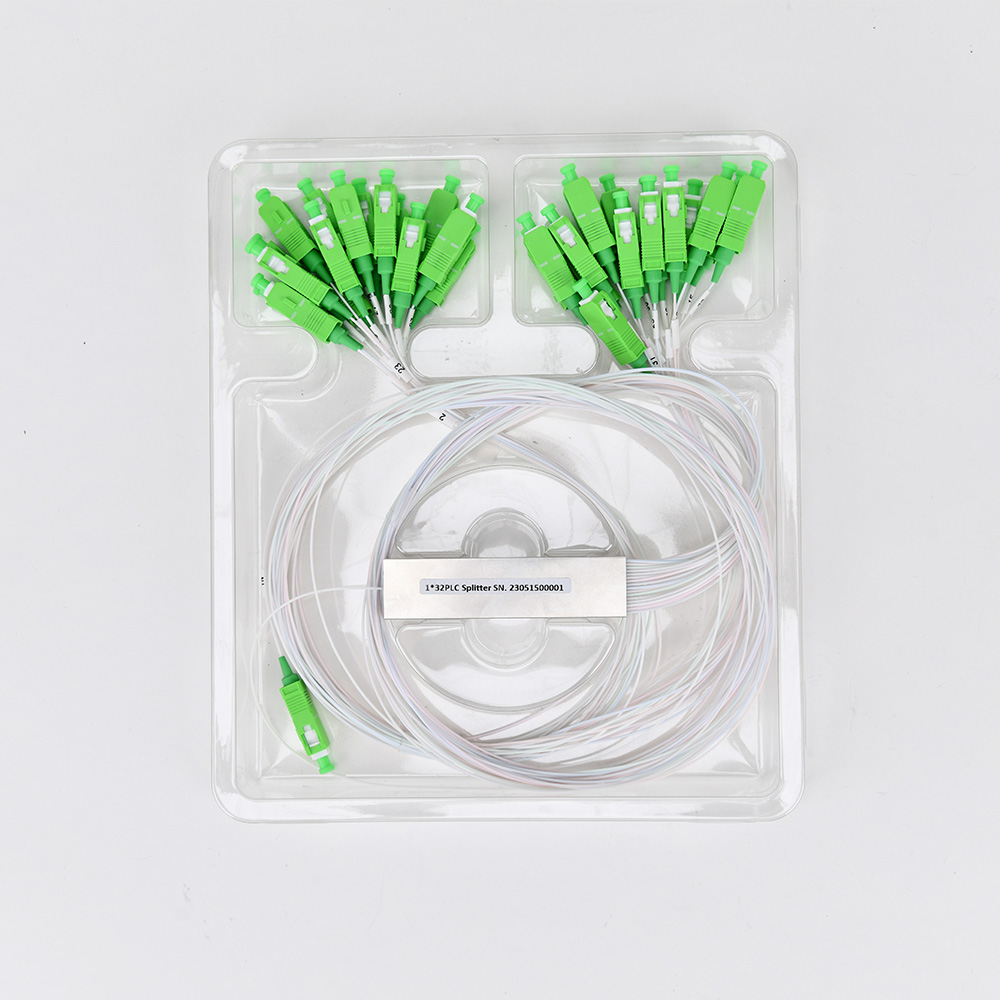
Mini Steel Tube Type Splitter
A fiber optic PLC splitter, also known as a beam splitter, is an integrated waveguide optical power distribution device based on a quartz substrate. It is similar to a coaxial cable transmission system. The optical network system also requires an optical signal to be coupled to the branch distribution. The fiber optic splitter is one of the most important passive devices in the optical fiber link. It is an optical fiber tandem device with many input terminals and many output terminals. It is especially applicable to a passive optical network (EPON, GPON, BPON, FTTX, FTTH, etc.) to connect the ODF and the terminal equipment and to achieve the branching of the optical signal. -

OPGW Optical Ground Wire
Layered stranded OPGW is one or more fiber-optic stainless steel units and aluminum-clad steel wires together, with stranded technology to fix the cable, aluminum-clad steel wire stranded layers of more than two layers, the product features can accommodate multiple fiber-optic unit tubes, fiber core capacity is large. At the same time, the cable diameter is relatively large, and the electrical and mechanical properties are better. The product features light weight, small cable diameter and easy installation. -

Anchoring Clamp PA600
The anchoring cable clamp PA600 is a high-quality and durable product. It consists of two parts: a stainless-steel wire and a reinforced nylon body made of plastic. The body of the clamp is made of UV plastic, which is friendly and safe to use even in tropical environments. The FTTH anchor clamp is designed to fit various ADSS cable designs and can hold cables with diameters of 3-9mm. It is used on dead-end fiber optic cables. Installing the FTTH drop cable fitting is easy, but preparation of the optical cable is required before attaching it. The open hook self-locking construction makes installation on fiber poles easier. The anchor FTTX optical fiber clamp and drop wire cable brackets are available either separately or together as an assembly. FTTX drop cable anchor clamps have passed tensile tests and have been tested in temperatures ranging from -40 to 60 degrees. They have also undergone temperature cycling tests, aging tests, and corrosion-resistant tests. -

SFP-ETRx-4
The ER4 is a transceiver module designed for 40km optical communication applications. The design is compliant to 40GBASE-ER4 of the IEEE P802.3ba standard. The module converts 4 inputs channels (ch) of 10Gb/s electrical data to 4 CWDM optical signals, and multiplexes them into a single channel for 40Gb/s optical transmission. Reversely, on the receiver side, the module optically demultiplexes a 40Gb/s input into 4 CWDM channels signals, and converts them to 4 channel output electrical data. -
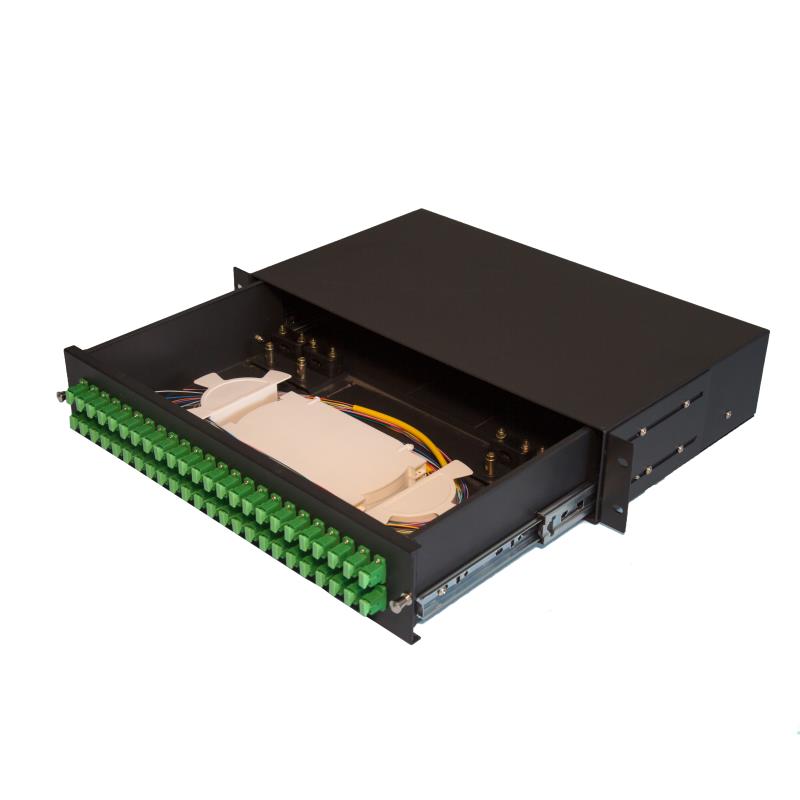
OYI-ODF-SR-Series Type
The OYI-ODF-SR-Series type optical fiber cable terminal panel is used for cable terminal connection and can also be used as a distribution box. It has a 19″ standard structure and is rack-mounted with a drawer structure design. It allows for flexible pulling and is convenient to operate. It is suitable for SC, LC, ST, FC, E2000 adapters, and more. The rack mounted optical cable terminal box is a device that terminates between the optical cables and the optical communication equipment. It has the functions of splicing, termination, storing, and patching of optical cables. The SR-series sliding rail enclosure allows for easy access to fiber management and splicing. It is a versatile solution available in multiple sizes (1U/2U/3U/4U) and styles for building backbones, data centers, and enterprise applications.
If you're looking for a reliable, high-speed fibre optic cable solution, look no further than OYI. Contact us now to see how we can help you stay connected and take your business to the next level.
